
Weed in Cusco: A High-Altitude Guide to Cannabis, Laws, Culture, and Travel Reality
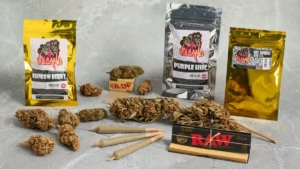
Cusco has a way of making everything feel larger than life. The stonework is ancient, the light changes fast at altitude, and the city’s energy swings between sacred and social—one moment you’re walking through Inca walls, the next you’re in a café planning tomorrow’s trip to the Sacred Valley or Machu Picchu. Because Cusco is one of South America’s biggest traveler magnets, questions about cannabis come up constantly. People hear rumors, compare Peru to other countries, and assume that because Cusco is touristy, cannabis must be “easy” or “low-risk.”
The reality is more complicated—and it’s worth understanding before you do anything that could mess up your trip.
Peru does not have a legal, regulated recreational cannabis market. That means there are no legal “tourist dispensaries,” no official recreational sales, and no guarantee of safety or quality in anything you might encounter informally. Peru does have a medical cannabis framework, and Peru’s laws are often described as having personal possession thresholds that may be treated differently than trafficking. But “treated differently” does not mean “everything is fine,” especially when you’re a visitor navigating language, local norms, and the unpredictable realities of enforcement.
This guide is written for travelers who want a clear, grounded picture: the legal landscape, what cannabis culture in Cusco looks like, what risks are common, and what safer alternatives exist—without telling anyone how to break the law.
Featured Image
Why Cusco Feels Like a “Weed City” (Even When It Isn’t)
Cusco is built for travelers. Hostels, bars, walking tours, backpacker restaurants, and a constant flow of people swapping tips make it feel like a place where “anything goes.” In that environment, cannabis rumors spread fast:
-
“It’s basically decriminalized.”
-
“Everyone does it here.”
-
“Nobody cares if you’re a tourist.”
-
“Cusco is chill—just don’t be obvious.”
These ideas can be half-truths mixed with wishful thinking. Yes, you may see or smell cannabis occasionally in party areas. Yes, some travelers talk about it casually. But Peru’s legal framework is not the same as fully legal jurisdictions, and tourist-friendly doesn’t equal consequence-free.
Cusco is also not isolated—policing priorities can change around events, tourist surges, festivals, or crackdowns, and you’re never in control of when a “normal” night turns into an official problem.
Cannabis Laws in Peru: What a Tourist Should Understand
Peru’s cannabis situation is often summarized as:
-
Recreational cannabis: illegal to sell and not regulated as a consumer market
-
Medical cannabis: legal under a regulated framework
-
Possession: sometimes discussed as “decriminalized” up to certain thresholds, but enforcement and context matter
That last point is where travelers get confused.
In Peru, you may hear about a “personal possession amount” (often cited as small grams for cannabis). People interpret that as permission. But the law’s approach to small quantities—where it applies, how it’s interpreted, and what happens in real life—can vary depending on circumstances.
Even if someone tells you “it’s allowed,” you still have to consider:
-
Where you are (public spaces vs. private)
-
Whether there’s any perception of distribution
-
Whether you’re carrying multiple items or mixed substances
-
Whether you’re near schools, tourist monuments, checkpoints, or transport hubs
-
Whether an officer wants to escalate a situation
For tourists, the simplest truth is: Peru is not a safe place to treat cannabis like a casual legal purchase.
Medical Cannabis in Peru: Legal, But Not a Tourist Shortcut
Peru legalized medical cannabis through national law and regulation. That means there is a framework for controlled access—typically involving prescriptions/authorization and regulated channels.
What this does not mean:
-
It does not mean recreational use is legal.
-
It does not mean informal sellers are “medical providers.”
-
It does not mean tourists can simply walk in and purchase cannabis the way they might in some other countries.
If you’re traveling with a medical cannabis prescription from your home country, you should assume nothing transfers automatically. International rules can be strict, and Peru’s regulations and import rules are not something you want to guess about at an airport.
How Cannabis Culture Shows Up in Cusco
Cusco’s cannabis culture exists, but it’s usually quiet and informal, not openly commercial.
You’ll typically see cannabis referenced in three ways:
-
Backpacker conversation: casual talk in hostels, bars, and tour meetups.
-
Party-night scenes: late-night areas where people assume anything social is normal.
-
“Friendly” approaches: someone offering help or “connections” as if it’s a service.
That third category is where the risk spikes. Travelers who act like cannabis is a tourist commodity are the ones most likely to run into scams, unsafe situations, or legal trouble.
A useful way to think about it: in Cusco, cannabis isn’t a regulated product—it’s a risk variable. The moment it becomes part of your trip plan, your odds of friction go up.
Common Travel Risks in Cusco Related to Weed
Cusco is generally friendly, but like any major tourist hub, it has a layer of opportunism. Cannabis curiosity can make you an easy target.
Scams and set-ups
Tourists can be overcharged, pressured, or guided into uncomfortable situations. Sometimes the scam is as simple as selling worthless material. Other times it’s a situation designed to intimidate or extract money.
Unregulated product safety
Even if something is actually cannabis, you don’t know:
-
What it’s been exposed to
-
Whether it’s moldy (Cusco nights get cold, but storage conditions vary)
-
Whether it’s mixed with other plant matter or residues
Public space consequences
Cusco’s historic center is heavily walked and monitored. Being “low-key” is not a guarantee. The city has plenty of public squares, stairways, viewpoints, and narrow streets where you can’t control who passes by.
Trip disruption
Even minor legal trouble can derail tours, Machu Picchu tickets, flights, or bus travel. Cusco is a logistics city—most travelers have bookings stacked back-to-back. A single problem can cascade into missed reservations and lost money.
Cusco + Altitude: Why Weed Can Feel Stronger Here
Even if you’ve used cannabis before, Cusco’s altitude can change how your body reacts to everything—sleep, hydration, alcohol, and yes, intoxicants.
At altitude, you’re more likely to experience:
-
Faster fatigue
-
Headaches
-
Poor sleep quality
-
Anxiety spikes (especially the first days)
-
Dehydration effects that “feel like something else”
Cannabis can amplify anxiety for some people, and at altitude that can be more intense—especially if you’re already tired, underfed, or acclimatizing.
If your goal is to enjoy Cusco (and not spend the night spiraling), altitude alone is a reason to be extra cautious with anything psychoactive.
What Travelers Often Want Instead: Relaxation, Sleep, and “Chill”
A lot of people asking about weed in Cusco aren’t trying to party—they want to:
-
Sleep better after travel
-
Ease anxiety
-
Relax sore muscles
-
Take the edge off a busy itinerary
There are safer, legal ways to do those things in Cusco:
Altitude-friendly routines
-
Slow mornings: take a gentle walk before tours
-
Hydration + electrolytes
-
Light meals early in the trip
-
Minimal alcohol during acclimatization
Cusco’s legal comfort culture
-
Cafés and tea houses with traditional infusions (ask what’s common and legal)
-
Massage/spa options (many are geared toward trekkers)
-
Yoga and breathwork classes in tourist areas
Pharmacy-based solutions
If you genuinely need a sleep or anxiety aid, use legitimate medical channels. Don’t risk your trip on unregulated, unknown products.
Responsible Harm Reduction (General, Not How-To)
If cannabis is part of your lifestyle back home, the best travel approach is to lower risk, not escalate it.
-
Don’t mix substances (especially alcohol + unknown cannabis products).
-
Avoid public consumption—public spaces create visibility and legal exposure.
-
Know your anxiety profile—Cusco altitude can intensify anxious reactions.
-
Don’t let strangers “manage the situation”—if a conversation starts feeling like pressure, leave.
-
Never be impaired during treks or transport—Cusco travel includes cliffs, uneven stone, and high-altitude hiking.
Even aside from legal issues, this is just smart travel.
Cannabis and Sacred Spaces: Respect Matters in Cusco
Cusco isn’t just a party city—it’s a spiritual and cultural center. Many sites around Cusco (temples, churches, archaeological areas) carry deep meaning and are protected for heritage reasons.
Treating those spaces like a “hangout” spot—especially if intoxicated—is a fast way to offend people, attract attention, and create problems. If you’re traveling for the history and culture, respect is not only ethical—it keeps you safe.
If You’re Determined to Learn: Education Without Risk
Some travelers are simply curious—laws, effects, medical research, policy changes. You can satisfy that curiosity without turning your trip into a gamble.
Here are three credible educational resources (and these are the only outbound links included, as you requested):
FAQs: Weed in Cusco
Is weed legal in Cusco?
Recreational cannabis is not legally regulated for sale in Cusco or Peru. Peru has a medical cannabis framework, but that is different from recreational legality.
Is Peru “decriminalized” for weed?
People often describe Peru as having personal possession thresholds that may be treated differently than trafficking, but that does not create a legal recreational market. Enforcement and context still matter.
Can tourists buy cannabis legally in Cusco?
There is no legal recreational dispensary system for tourists. If someone offers you cannabis casually, that is not a regulated purchase and carries legal and personal safety risks.
Is medical cannabis legal in Peru?
Yes, Peru has legalized medical cannabis under national law with regulated access. That does not mean informal street sales are legal or “medical.”
Does altitude change how cannabis feels?
For many people, yes. Cusco’s altitude can intensify anxiety, dizziness, or fatigue—especially if you’re not acclimatized, dehydrated, or sleep-deprived.
What’s the biggest danger for visitors asking around?
Scams, unsafe situations, and trip disruption. Even a small incident can cause you to miss tours, transport, or reservations.
Is it safer to use cannabis in private than public?
Private settings reduce visibility, but they don’t remove legal risk or product safety risk. The safest choice is to avoid illegal cannabis while traveling.
Are edibles “safer” because there’s no smoke?
Not necessarily. In unregulated contexts, edibles can be unpredictable in strength and ingredients, and effects can hit later and harder than expected.
What are safer alternatives in Cusco to relax?
Hydration, altitude-friendly pacing, massage/spa options, yoga/breathwork, and legal pharmacy-based support if medically appropriate.
What should I do if someone pressures me or offers “help” finding weed?
End the conversation and walk away. Cusco is a tourist city—pressure tactics and opportunism exist, and you don’t owe anyone engagement.
References
Reference 1
Peru medical cannabis legalization and regulatory framework (national law and implementing regulations; general overview).
Reference 2
Peru drug policy discussions and the distinction between personal possession thresholds and trafficking enforcement (contextual legal interpretations).
Reference 3
Travel health guidance relevant to altitude acclimatization and psychoactive substance sensitivity (general travel medicine principles).
Reference 4
Harm reduction fundamentals for travel settings: avoiding unknown products, avoiding mixing substances, and prioritizing legal safety.
(If you want, I can format these references as short citations tailored for a WordPress “Sources” box—without adding extra outbound links beyond your 3.)
Conclusion: Keep Cusco Magical, Not Messy
Cusco rewards travelers who move with awareness: respect the altitude, respect the culture, and respect that Peru’s cannabis situation is not a legalized tourist market. While Peru has a medical framework and its laws are often discussed in terms of personal possession thresholds, those details don’t protect you from the real-world risks that come with unregulated cannabis—scams, unsafe products, public exposure, and trip disruption.
If your priority is an unforgettable journey through the Andes—Machu Picchu, the Sacred Valley, sunrise viewpoints, and the city’s living history—the safest play is to keep cannabis curiosity in the education lane, not the action lane. Your future self (and your itinerary) will thank you/weed in Cusco.
Mr. Josh’s product exceeded my expectations in both potency and purity, I really appreciated the discretion and professionalism in the delivery process , you can reach to him on Telegram https://t.me/joshlegitplug and also there email joshchris385@gmail.com
Highly recommend for medical users looking for consistent effects.
The indica blend helped me finally sleep through the night thank you.
I appreciate how Mr. Josh respects privacy and always stays professional.
I’ve tried products from multiple vendors, but Mr Josh stands out.
I was skeptical at first, but now I won’t shop anywhere else, the product smells like pine and citrus—very inviting.
